

OUTBOARS
Outboard Motor Buying Guide: How to Choose Horsepower and Shaft Length
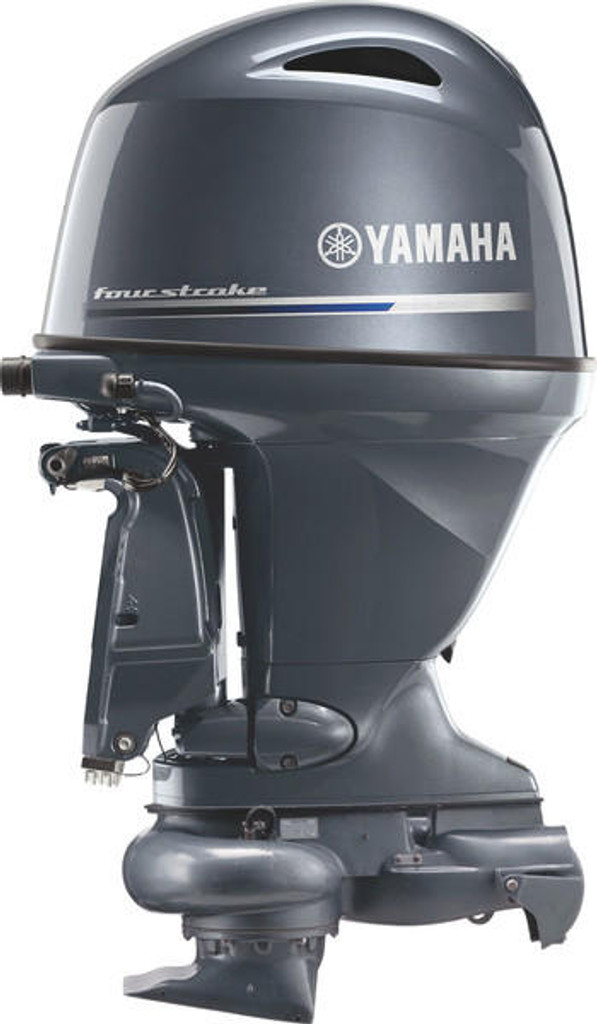
An outboard motor is a self-contained engine, gearbox and propeller that bolts onto the back (the transom) of your boat to push and steer it. Picking the right one comes down to two numbers: horsepower and shaft length. Get those right and everything else (brand, colour, tiller or remote steering) is the fun part.
This guide walks you through both in plain English, shows you exactly where to look on your boat, and links you straight to the motors that fit. Grab a tape measure and a coffee. This takes about five minutes.
Step 1: Check your boat’s capacity plate
Every modern boat has a small capacity plate near the helm or transom. It lists the maximum horsepower the hull is rated for. Think of it as the speed limit for your boat: going over it can void insurance, upset the coast guard and make the boat dangerous to handle. Your ideal motor usually sits between 70% and 100% of that maximum. Less than that and you will be pushing the throttle all day; right at the limit gives you the best hole shot and fuel economy at cruise.
Step 2: Match horsepower to your boat
Here is the cheat sheet our team uses every day when customers call in:
- Inflatables, tenders and dinghies (8 to 11 ft): 2.5 HP to 9.9 HP. Light, portable and easy to carry down the dock.
- Jon boats and small aluminium boats (12 to 16 ft): 9.9 HP to 40 HP. The 9.9 is also the classic kicker motor for trolling.
- Fishing skiffs and RIBs (14 to 18 ft): 15 HP to 60 HP. Enough grunt to get on plane with two anglers and a cooler.
- Pontoons (18 to 24 ft): 50 HP to 150 HP. Want to pull a tube with the whole family aboard? Aim high.
- Bay and bass boats (18 to 22 ft): 115 HP to 250 HP.
- Center consoles (20 to 26 ft): 150 HP to 300 HP, single or twin.
- Offshore boats (26 ft and up): 250 HP to 450 HP, usually in twin or triple rigs.
Want to see every brand at one power side by side? Our outboard motors by horsepower page lines up Yamaha, Mercury, Honda, Suzuki and Tohatsu at each HP so you can compare price and features in one place.
Step 3: Measure your transom for shaft length
Shaft length is the distance from the top of the motor’s mounting bracket down to the anti-ventilation plate just above the propeller. It has to match your transom height so the prop sits at the right depth. Too short and the prop sucks air; too long and you drag the lower unit through the water like an anchor.
Measure from the top centre of your transom straight down to the bottom of the hull, then match it:
- About 15 inches: 15″ short shaft
- About 20 inches: 20″ long shaft
- About 25 inches: 25″ extra long shaft
- About 30 inches: 30″ XX long shaft
Our full outboard shaft length guide has simple step-by-step instructions and covers 35 inch rigs too.
Step 4: Choose your features
Now the fun part. A few quick decisions narrow the list fast:
- Four-stroke or two-stroke? Almost every new outboard today is a four-stroke: quieter, cleaner and easier on fuel.
- Tiller or remote steering? Tiller handles suit small boats and solo anglers. Anything with a steering wheel needs a remote-control model.
- Manual or electric start? Up to about 20 HP pull start is easy. Above that, electric start is the norm and charges your battery as you run.
- Power trim and tilt? Worth it from about 40 HP up. It lets you fine-tune the ride and lift the motor in shallow water at the push of a button.
Model codes tell you most of this at a glance. Our help and search guide decodes them, so “9.9 ELPT” instantly reads as 9.9 HP, electric start, long shaft, power trim.
Step 5: Pick your brand
Honestly, you cannot go wrong with any of the big names. Yamaha is famous for bulletproof reliability, Mercury for punchy performance and a huge dealer network, Honda for whisper-quiet efficiency, Suzuki for clever fuel-saving tech and Tohatsu for lightweight, great-value portables. If you already have rigging, gauges or a spare prop for one brand, sticking with it saves money.
Can’t find the exact motor?
We stock hundreds of outboards, but if your exact model, colour or shaft length is not listed, we will track it down for you. Send us the details on our request a quote page and we will come back with price, availability and shipping to your door, usually within 24 hours.
Ready to go? Start with shop by horsepower, measure for shaft length, and you will be on the water before you know it.